

Summary

Both road experts, Jean-Marie Deck and Rachid Tantast explain how to reconcile a long-term vision with local constraints. They shed further light on the challenges of road infrastructure maintenance and the concept of preventive maintenance.
Check out his video interview at the end of this article!
Background presentation

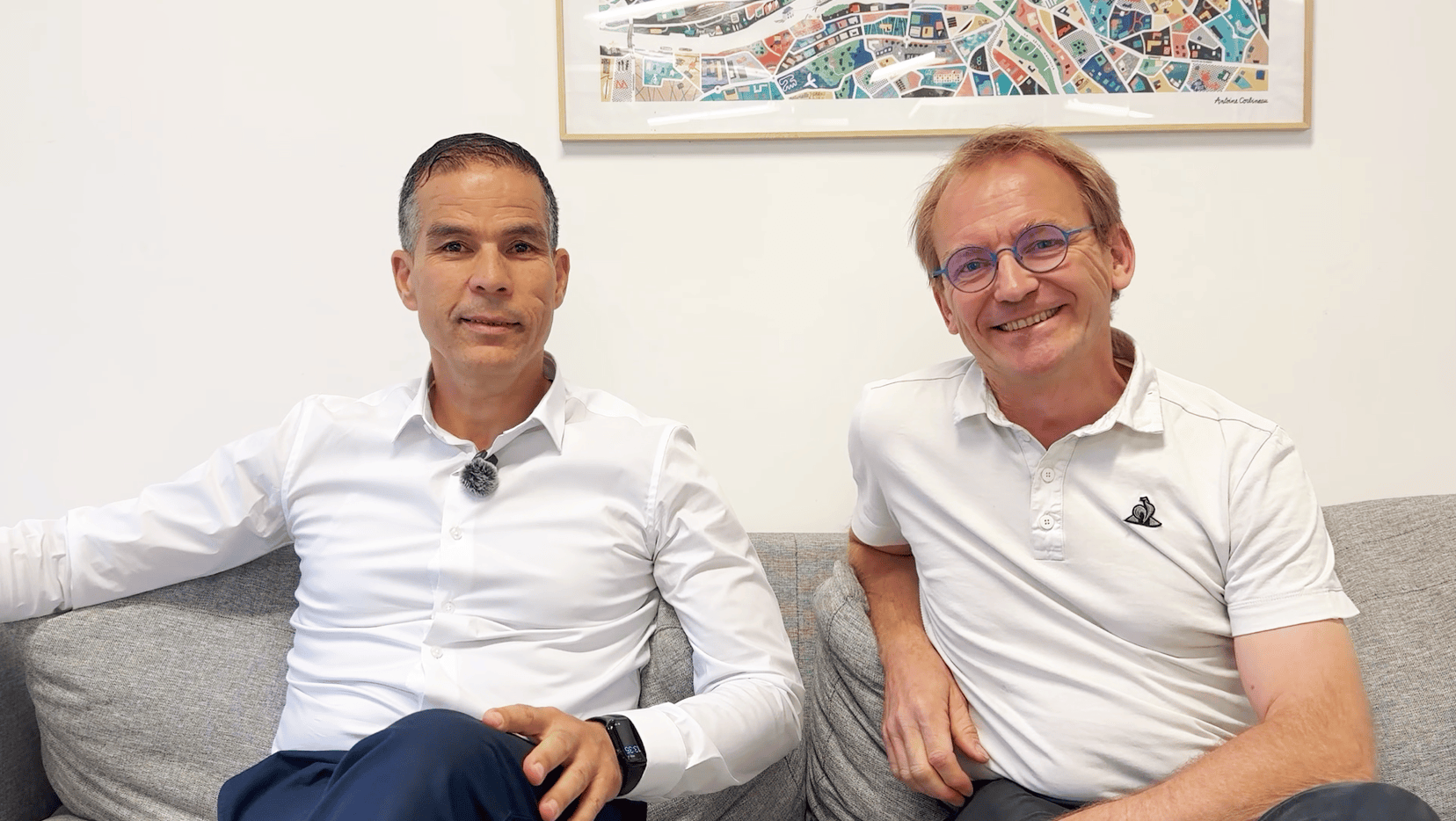
Could you introduce yourselves?
Jean-Marie Deck :
« I am Jean-Marie Deck, and I have about thirty years of experience in the road and highway ecosystem. My role at Logiroad is to provide my expertise internally for our teams, as well as for road managers. This is a comprehensive expertise, covering both the technical aspects and all the peripheral elements revolving around road asset management. »
Rachid Tantast :
« I am Rachid Tantast, and I have nearly 20 years of experience in road expertise. I worked with many engineering consultancies before joining Logiroad to work across the entire road lifecycle, from condition surveys to the structural design of pavements. My role today at Logiroad is to support clients in making the best decisions for the maintenance of their assets. »

Pouvez-vous vous présenter ?
Jean-Marie :
« I am Jean-Marie Deck, and I have about thirty years of experience in the road and highway ecosystem. My role at Logiroad is to provide my expertise internally for our teams, as well as for road managers. This is a comprehensive expertise, covering both the technical aspects and all the peripheral elements revolving around road asset management. »
Rachid :
« I am Rachid Tantast, and I have nearly 20 years of experience in road expertise. I worked with many engineering consultancies before joining Logiroad to work across the entire road lifecycle, from condition surveys to the structural design of pavements. My role today at Logiroad is to support clients in making the best decisions for the maintenance of their assets. »
Could you tell us about your background?
Rachid :
« I specialize in embedded electronics, more specifically in multi-sensor condition survey equipment: laser, LiDAR, and cameras. Almost 20 years later, I am still in this field, in the road industry, developing and supporting teams in the deployment of artificial intelligence for pavement distress detection and analysis. »
Jean-Marie :
« I started out by joining a road construction company, gaining my first experience in construction. This was followed by roles in an engineering, inspection, and expertise consultancy—focusing on pavement design—and finally with a highway infrastructure manager. It was there that I took on various roles: asset management, traffic management, and ultimately, the development of overall maintenance strategies. During this time, I faced the challenges and complexities of developing asset management programs. It is also where I met Philippe LEPERT, with whom I began a very long-term collaboration almost 15 years ago. »
The challenge of road maintenance today
What makes managing a road network complex?
Jean-Marie :
« Managing a road network is complex because you have to answer several questions. Which road network are we talking about? What is its scope, and in what condition is it? In what condition do we want it to be in the future? Over what timeframe, with what resources, where are the priorities, what are the constraints… and on top of that, all these elements must be considered over the long term, as we are sometimes talking about horizons of over 10 years. Therefore, building easily understandable and communicable frameworks that enable a decision-maker to make trade-offs represents a significant complexity, and sometimes a challenge. Our goal is to integrate all this reasoning to deliver the final output. »
Rachid :
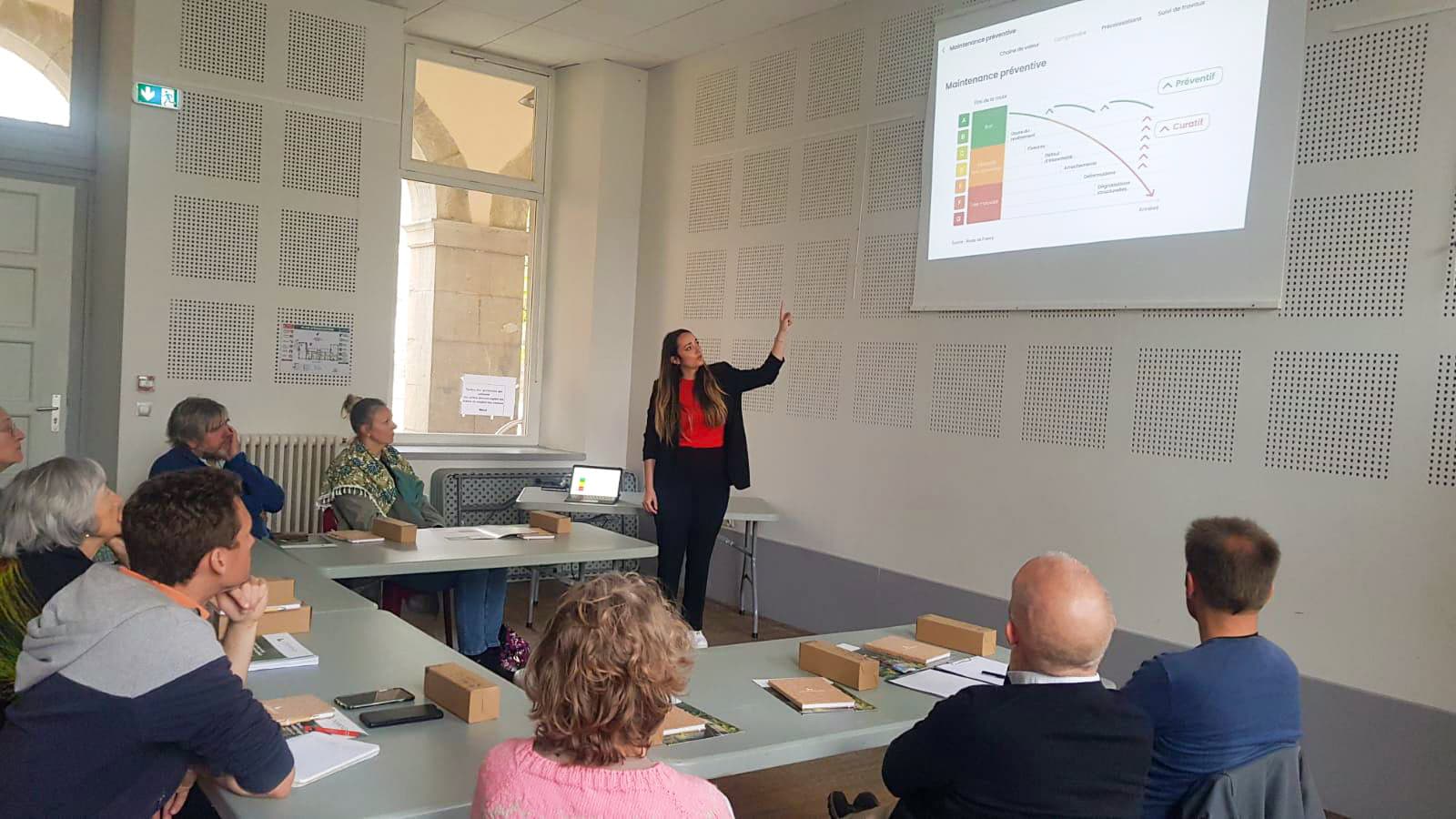
« The major challenge for managers today remains the budget. They have constrained budgets to manage vast road networks. Added to this budget issue are the natural aging of pavements and distresses, the impact of climate change, and changes in traffic patterns, including an increase in the number of heavy goods vehicles (HGVs) on the network. Faced with this, our role is to support managers in better ranking and prioritizing their budgets, so they spend them in the right place, at the right time. »
Why has this issue become central for local authorities today?
Rachid :
« Today, as I mentioned earlier regarding budget constraints, it is absolutely essential that managers intervene in the right places, because postponing roadworks costs them significantly more. Only treating the surface and avoiding structural works means seeing distresses reappear after just a few months or years. One euro not invested today means tens of euros in the years to come. The ultimate goal is to truly find the right balance between the budget, network management, and user safety. »
Jean-Marie :
« Our society is built on the movement of goods and people. Our road networks represent a collective wealth. It is a wealth that we have largely inherited from previous generations and that we borrow from future generations, so maintaining this network is of primary interest for our sustainability. That is the first point. This network ages and sustains damage. This network is used, therefore it wears out, and it is crucial to allocate the necessary—albeit constrained—resources to the areas on our network that need it most. So for a manager, especially if the network starts to expand, they will need to anticipate the network’s needs in the coming years in order to make trade-offs and forecast the funds and resources required to perform maintenance at the right time, keeping in mind that any delay in maintenance leads to costs. These can be either additional construction costs or induced operational costs linked to the condition of the road. »
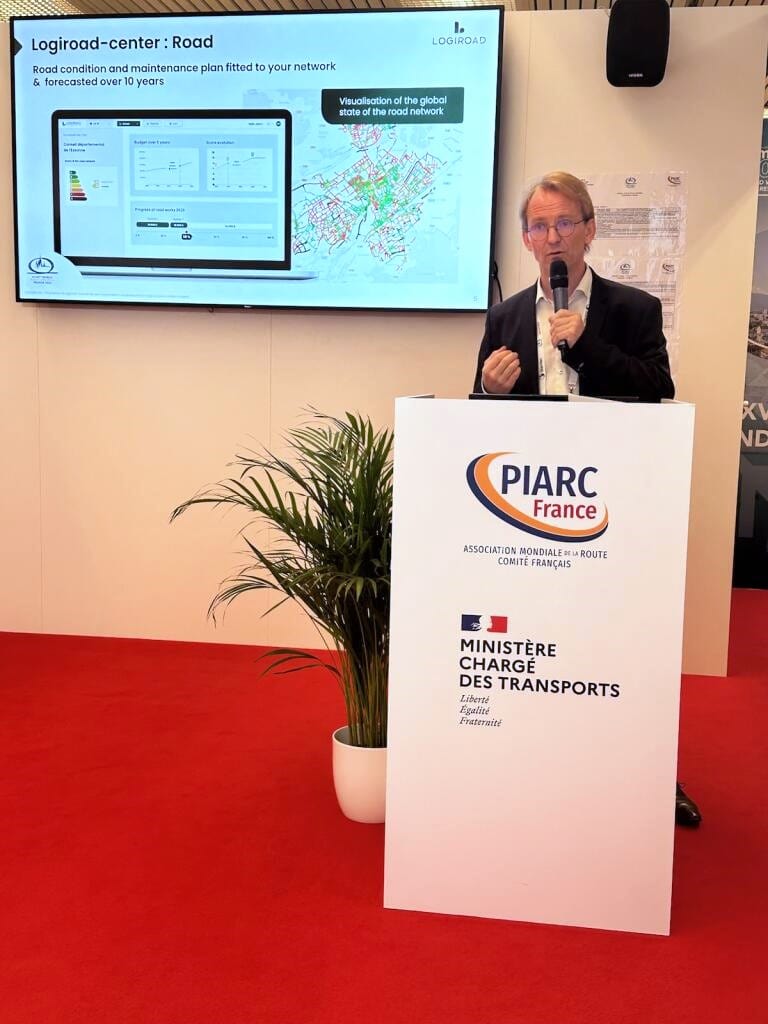
« The ultimate goal is to truly find the right balance between the budget, network management, and user safety. »
Rachid Tantast
What is the difference between "reactive" management and proactive management?
Jean-Marie :
« I like to use the metaphor or image of a boat. You can get on a boat, head out to sea, and wait until you are in a storm to ask yourself: how do we get out of this now? You will spend a lot of energy, take a lot of risks, and it is not certain you will arrive faster; in fact, it’s almost certain you will arrive at your destination much later. That is reactive management. You wait until you have problems to react. Proactive, well-steered management is someone who takes the boat after checking the weather forecast, knowing their boat’s characteristics, and therefore anticipating to avoid storm zones. For a pavement, this means that you have conducted diagnostics, prioritized, and ranked your network, allowing you to anticipate and carry out roadworks before the occurrence of severe distresses that would impact the proper functioning of the network and traffic flow. »
From data to decision
How do you approach a network at the start of a project?
Rachid :
« At the start of a project, we first communicate extensively with the client about their network hierarchy, the roadworks they usually carry out, and their maintenance techniques. We organize data collection, dispatching our survey equipment to the field to record distresses, and following this, we now have tools that allow us to detect distresses using artificial intelligence, along with quality controls to validate these distresses. Our role afterwards is to analyze the root cause of the distresses to guide the client towards either structural works or just a resurfacing of the wearing course, which obviously do not have the same maintenance costs. »
Jean-Marie :
« One point of focus we have at the start of every study is that it is a human endeavor. Meaning that we are dealing with decision-makers, technical managers, people who have issues specific to their network. And it is the time and energy we dedicate to them, to fully understand their context, that makes the final results we deliver to them truly relevant. »

How do you move from field diagnostics to a maintenance decision?
Rachid :
« We cross-reference all the collected data to output works solutions that are tailored to the manager’s needs, but also adapted to the contractors operating in their territory. The ultimate goal is not to impose a standard solution on them, but to truly support them in implementing sustainable and relevant solutions. »
Pavement aging simulations, works effect models—how does it work?
Jean-Marie :
« We take a long-term approach. We have to start from the initial situation, with the distress records, and age this situation to simulate its evolution, year after year. We simulate both the proposed maintenance works and their impact on the distresses, as well as the evolution of distresses that have not undergone works—which will therefore continue to deteriorate—along with the emergence of future distresses on sections that did not yet have any distress at the time of the survey. This is where we utilize all the research initially spearheaded by Philippe LEPERT through several academic theses, which we have supplemented with all the expertise developed from the numerous projects we have conducted with all our managers. This allows us to closely approximate the deterioration process—the aging of the distresses—and the treatment performance models (the effects of works) on these distresses. Applying all these simulations enables us to achieve a reasonable projection of a road network’s evolution and its condition over several years. »
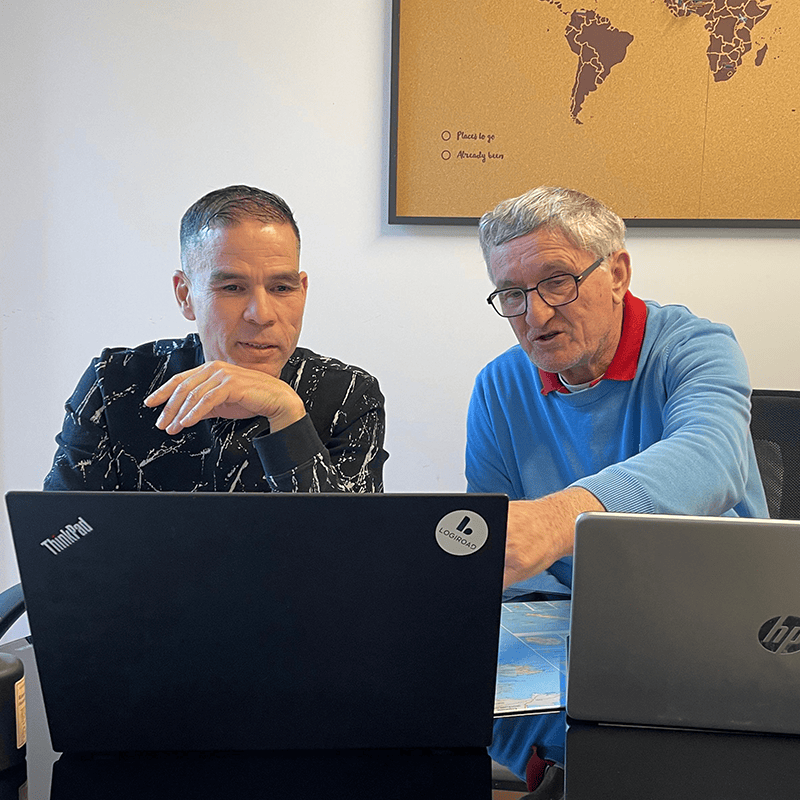
« Applying all these simulations enables us to achieve a reasonable projection of a road network's evolution and its condition over several years. »
Jean-Marie Deck
How have Logiroad's solutions changed the way you support managers?
Rachid :
« In the past, managers had scattered data in Excel spreadsheets, straight-line diagrams, and shapefiles. It was complicated for them to consolidate all this data to visualize it. But today, with Logiroad Center, we can truly centralize all that data on a single SaaS platform. It also gives the manager a comprehensive overview of the collected distresses, their network’s rating, works recommendations, as well as field photos. This also makes it much easier for them to track their budget and rank and prioritize their works zones. »
Jean-Marie :
« Logiroad’s historical software solutions were primarily aimed at very large-scale managers, who had the technical skills, the time, and the personnel ready to invest in these tools. They were very comprehensive tools—and indeed they still are—but they required significant user training and time investment. These tools enabled a complete modeling and approach to the networks. What we wanted with Logiroad Center was to make all this expertise accessible to managers who have less availability and potentially fewer in-house technical resources because they are already occupied with other tasks. The shift we made by developing Logiroad Center is to provide them with an easy-to-use tool where they can find all the necessary information to assist them in their decision-making process. »
Client case
Do you have an example of a project that particularly stood out to you?
Jean-Marie :
« A large, recently formed local authority contacted us to obtain a diagnostic and a programming of their maintenance works. They had a very patchy understanding of their network’s condition. Once the diagnostic was completed, we did an initial presentation, and we encountered a sense of incomprehension from the manager, who was absolutely not expecting these results. They believed their network was in a highly degraded state, and we demonstrated that, overall, their network was not actually severely degraded. We took the time with them to validate, verify, and build understanding, and despite some initial doubts, they eventually embraced these results and presented them. They came back to us shortly after, confirming that the objectivity of the work had allowed them to reach a milestone in the discussions they were having together, as this was a meeting of several municipalities within a community of municipalities. They had acknowledged the current condition and were able to project themselves into future actions. That day truly reinforced for us the importance of what we could bring to a manager, the importance of the initial diagnostic’s quality, and the importance of all those preliminary discussions to understand the context in which the manager is asking for our support. »

Could you summarize Logiroad's approach in one sentence?
Rachid : « Putting pavement expertise and data at the service of more sustainable and efficient maintenance decisions. »
Jean-Marie : « Simplifying technical complexity to empower decision-makers to make the right trade-offs. »

Every project is unique.
Let’s discuss it together.