

Summary
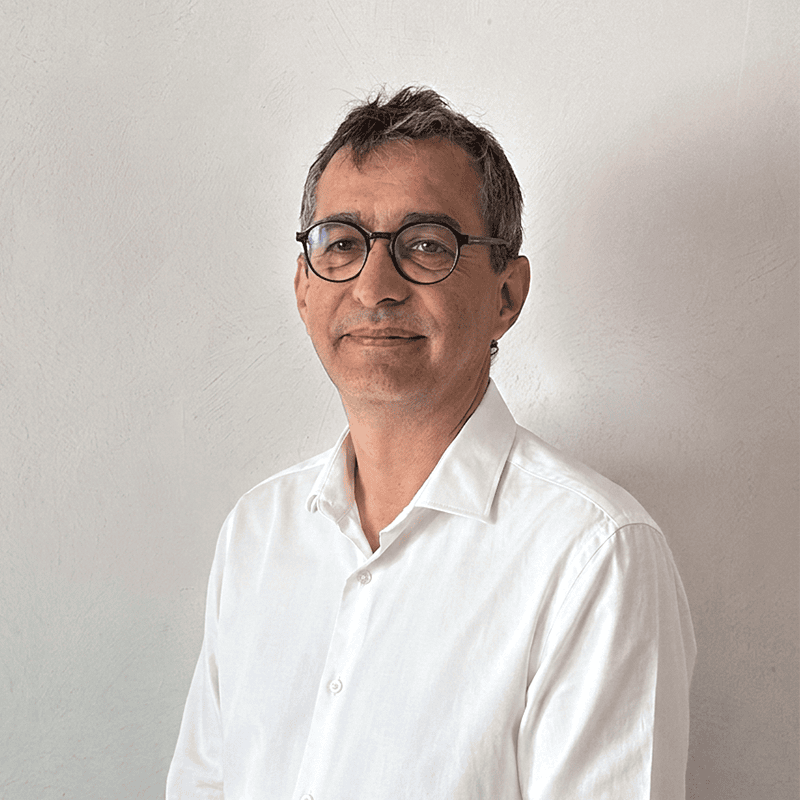
Professor at the University of Clermont Auvergne and scientific advisor at Logiroad, Thierry Chateau shares his vision of innovation serving local communities. He talks about the central role of research and the practical benefits of artificial intelligence for managing road infrastructures.
Check out his video interview at the end of this article!
Career presentation
Can you introduce yourself?
” Hello, my name is Thierry Chateau, I’m a university professor at University of Clermont and I’m 54 years old. My research areas are artificial intelligence, mostly applied to robotics issues.
In robotics, there are several aspects. There’s the perception aspect, I see the environment, and then the analysis aspect, what’s in that environment, and the decision aspect. “
What was your background in research before Logiroad?
” I have a somewhat unusual background because I wasn’t originally meant to go into research.
I did a technical high school diploma followed by a higher technician certificate, a BTS, and that’s when I joined an engineering school where I was supposed to study electrical engineering. And in the final year of this engineering school, I discovered research thanks to an internship.
It really made me want to continue in this field of innovation and research. And it led me to a thesis, still in the same areas, robotics and perception, and it was at the end of that thesis that I thought, I’m made to do this.
And so I took a competitive exam to become a lecturer at the University of Clermont, and since 2010 I’ve held a university professor position.

In the 2000s, the research model in France changed quite a bit, and we had research that was more project-driven. We encouraged research centers to collaborate with each other to bring in interdisciplinarity and to propose research directions. And it was in this context that I met Yann Goyat, from the Central Laboratory of Bridges and Roads..
And thanks to Yann Goyat, we worked a bit on security concepts, security related to infrastructures, and also vehicle security.
It was a collaborative project. During this project, there was supposed to be a thesis. After discussions with his supervisor, who was Philippe Lepert, an agreement was reached, and it was in that context that I supervised Yann Goyat’s thesis. This was around 2006 or so, and it was a brilliantly defended thesis, and then we know the story that we’ll recall here. “
Are there different types of AI ?
” What you need to know is that today we distinguish between 2 types of AI.
We have what’s called generative AI, which is an AI that we control through what are called prompts. You write something like ‘draw me a sheep,’ and then the machine will produce a picture of a sheep. It’s called generative because if you write it twice, you won’t get the same sheep. So the machine is capable of generating things, of basically inventing them on its own.
The second type of AI that will interest us more at Logiroad is the AI called ‘discriminative’, which is simply an AI that makes a decision. You show it an image, and it has to say whether there is a road in that image or not, for example.
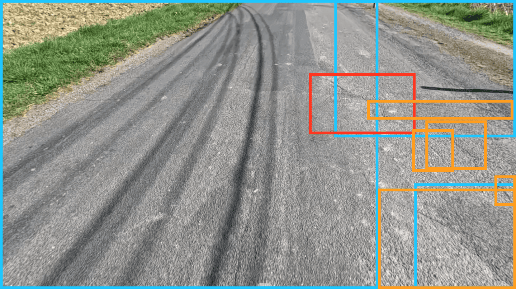
This is called classification. Where is the road? Am I able to circle it with what we’re going to call a bounding box? We’re going to call this detection, which means that roughly I’m figuring out where the road is.
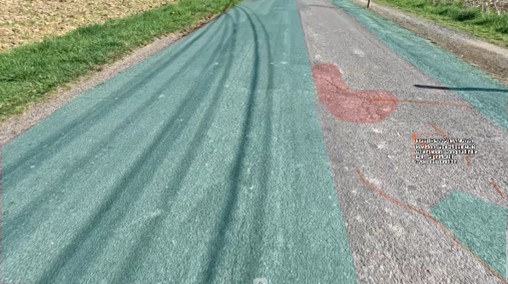
Am I able to give all the points of the image that we call pixels that belong to the road? That’s an additional level which we call semantic segmentation because we’re assigning a semantic label to a pixel.
And I was convinced pretty early on about this type of artificial intelligence for Logiroad, because we’ll talk about it a bit more later. It brings a huge amount of added value for the products and especially for the customers. “
What's your role as a scientific director ?
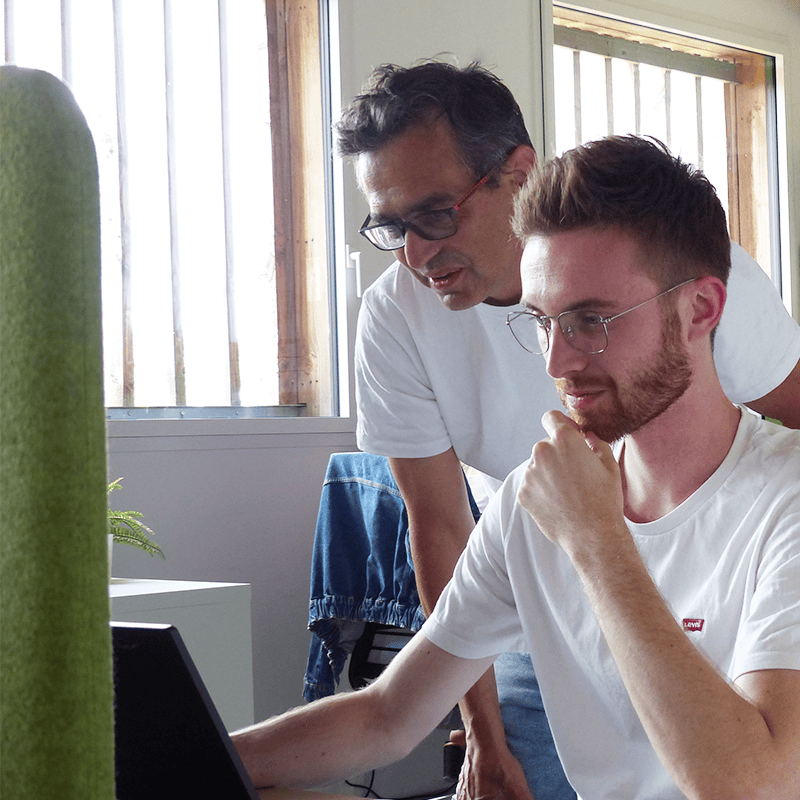
” A scientific director has several roles. The most important role is being able to make sure that the research directions taken by the company, in the context of creating new products, are on track.
The scientific director doesn’t define new products, it’s in the specifications, the clients define the new products. But the scientific director has to be able to make sure we’re making the right choices and using the right tech. “
What's your role as a scientific director ?
” A scientific director has several roles. The most important role is being able to make sure that the research directions taken by the company, in the context of creating new products, are on track.
The scientific director doesn’t define new products, it’s in the specifications, the clients define the new products. But the scientific director has to be able to make sure we’re making the right choices and using the right tech. “
" There are a number of theses that have been funded by Logiroad on important points. "
Thierry Chateau, AI scientific advisor
How are you supporting Logiroad today ?
” After 4 years at Logiroad, I went back to my teaching position, so I am still a professor today at the University of Clermont. But you don’t leave a company you’ve seen grow and where you tried to bring a lot of passion.
I play a role as a scientific advisor, and this role reflects on the main research directions, especially thinking about how we can imagine new AIs, and how we can today guide the different methods that research teams will follow in terms of artificial intelligence models.
My role as a university professor, on the one hand, when I arrived at Logiroad, and now, with my guidance, means that I have a good knowledge of academic research tools, especially theses, which are amazing tools to bring added value to a very specific field.
There are a number of theses that have been funded by Logiroad on important points. For example, trying to research road markings, or checking if these markings have a proper level of luminance. My role has been, and still is, to support the PhD students at Logiroad in their work in collaboration with the university. “
Why include research from the very beginning when creating Logiroad ?
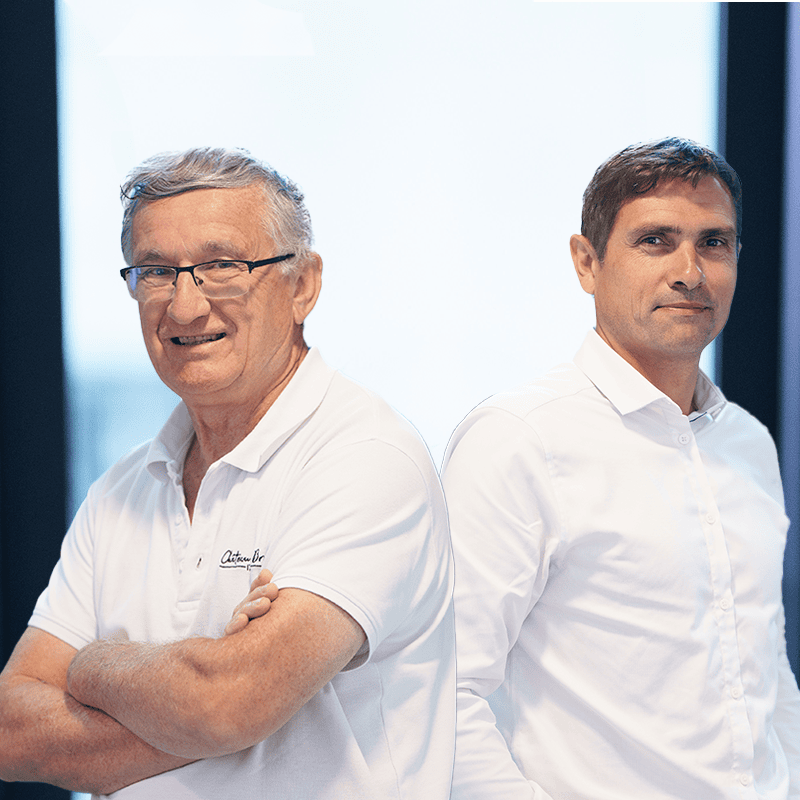
” Research and innovation are in Logiroad’s DNA. The main reason is that the two original founders of Logiroad, Yann Goyat and Philippe Lepert, both started out as researchers by training and have worked as researchers at the Central Laboratory of Bridges and Roads, which is now the Gustave Eiffel University.
They didn’t just create this company to bring a product to market. From the start, they wanted to keep connections, whether with the Laboratory of Bridges and Roads or with universities, and keep developing innovations so that these innovations would bring new features to the products.
There really was a proactive approach that involved saying no, at the same time, I also want to keep moving forward on future products, on the future improvements of the products that I’m working on.
This proactive approach means that Logiroad is, I think, always a step ahead of its competitors, who tend to have a model with a slightly smaller R&D share. “
Why include research from the very beginning when creating Logiroad ?
” Research and innovation are in Logiroad’s DNA. The main reason is that the two original founders of Logiroad, Yann Goyat and Philippe Lepert, both started out as researchers by training and have worked as researchers at the Central Laboratory of Bridges and Roads, which is now the Gustave Eiffel University.
They didn’t just create this company to bring a product to market. From the start, they wanted to keep connections, whether with the Laboratory of Bridges and Roads or with universities, and keep developing innovations so that these innovations would bring new features to the products.
There really was a proactive approach that involved saying no, at the same time, I also want to keep moving forward on future products, on the future improvements of the products that I’m working on.
This proactive approach means that Logiroad is, I think, always a step ahead of its competitors, who tend to have a model with a slightly smaller R&D share. “
What does research bring to Logiroad compared to a more 'conventional' approach ?
” A more conventional company either won’t have any research at all or will outsource really everything it needs. And in that case, it doesn’t have control over it. And then it’s dependent on its external partners. Maybe that’s a strategy.
On the other hand, Logiroad immediately decided to internalize all of its products and R&D, whether it was for the sensors, where it developed its own sensors, or for the software components, where it developed its own software components.
That’s really what sets Logiroad apart, it’s the fact that all of this is in-house and that, actually, we control all of it today. “
" Research and innovation are in Logiroad's DNA. "
Thierry Chateau, AI scientific advisor
What does research bring to Logiroad compared to a more 'conventional' approach ?
” A more conventional company either won’t have any research at all or will outsource really everything it needs. And in that case, it doesn’t have control over it. And then it’s dependent on its external partners. Maybe that’s a strategy.
On the other hand, Logiroad immediately decided to internalize all of its products and R&D, whether it was for the sensors, where it developed its own sensors, or for the software components, where it developed its own software components.
That’s really what sets Logiroad apart, it’s the fact that all of this is in-house and that, actually, we control all of it today. “
Creation of Logiroad's AI division
Can you tell us about the creation of the AI division at Logiroad ?
” Very quickly, the company Logiroad realized that if they wanted to help the most people, they needed to be able to scale up. And since the model was about going out on the roads, collecting digital data with sensors, and then analyzing that data, we thought, if I want to cover more roads, I’m going to have more data, I’m going to need better sensors, which means even more data, and I’m going to need tools to analyze this data faster and better. So, after a discussion I had with Yann Goyat, we very quickly thought: we need to come up with answers for all of that.
We need to bring in analysis support tools, AI tools, and so there was a thesis launched in 2013, under the CIFRE program, which focused on image analysis. At first, the product was more aimed at managing road traffic, but very quickly we thought, hey, these tools can also be used to detect damages. And that’s actually one of Logiroad’s main goals, to do diagnostics.
After this thesis, we thought, okay, let’s try to keep using these AI tools to detect damage. But at some point, we need to make all this sustainable. We need to have growing expertise and a real AI division with skills that stay in the long term. And we have really great AI for analyzing road damage.. “
" We put forward a project (AI4ROAD) that was approved by competitiveness clusters, which was very, very well received by the Investment Bank that named us the winner of an excellence competition called "i-Nov". "
Thierry Chateau, AI scientific advisor
What role did the IA4 Road project, carried out between 2021 and 2024, play?
” We need to launch R&D, we need to create the AIs, we need to create a visualization platform, it costs money. So we made a roadmap thinking it would cost this much. Then we went to the Public Investment Bank, BPI France, and told them, look, we have a project, we want to help, we want to help the municipalities, we want to help the departments better manage their road infrastructure.
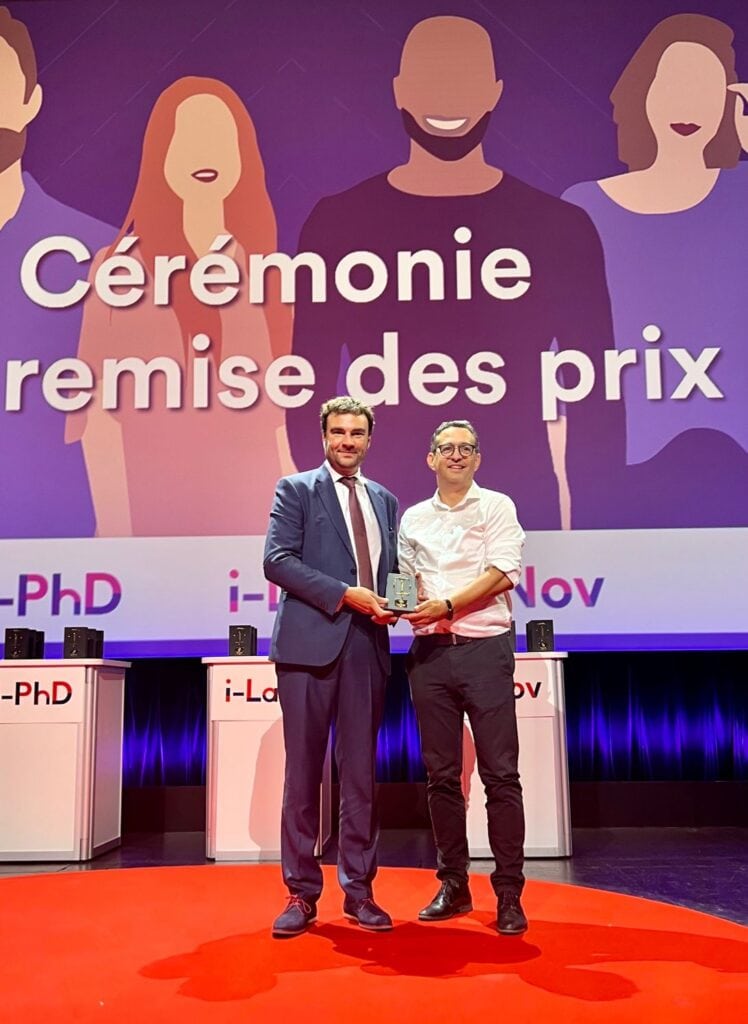
We put together a project that got certified by competitiveness clusters and was really, really well received by the Public Investment Bank, which named us winners of an excellence contest called «i-Nnov». We were super proud of that. It let us enter other contests where we also won. And most importantly, it helped us secure co-funding to create the Logiroad Center platform and develop the first AIs, which were AIs with bounding boxes.
In the AI4Road project, we went with bounding-box type AIs for several reasons. We knew from the start that it was pretty limiting because it wasn’t going to give us certain kinds of information. But the computing power we had five years ago allowed us to run these AIs at a speed that kept up with production, something that segmentation AI, which is more demanding, didn’t allow yet.
But we very quickly realized that it wasn’t enough, so it wasn’t enough for the clients.
Why? Because when you look at a road with a camera, and a perspective effect, and you only surround it with a bounding box, a crack, you don’t have enough information about the crack, you don’t have enough information about the crack. “
How does AI accuracy change the way road work is managed ?
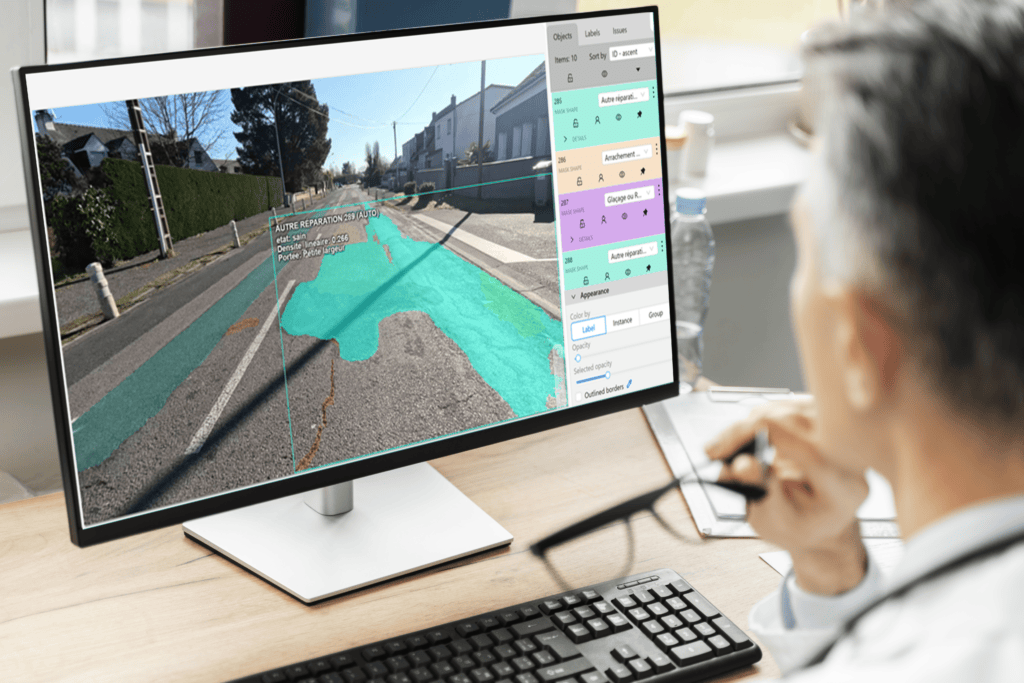
” What we need is to know the size of the crack. It’s like, if you circle a pothole, knowing the area of the pothole. And we don’t have that information when we have a bounding box. One way to get it is to go from a bounding box AI to an AI where we do semantic segmentation, that is, we link each pixel to whether it’s a damage or not. “
What role did the IA4 Road project, carried out between 2021 and 2024, play?
” We need to launch R&D, we need to create the AIs, we need to create a visualization platform, it costs money. So we made a roadmap thinking it would cost this much. Then we went to the Public Investment Bank, BPI France, and told them, look, we have a project, we want to help, we want to help the municipalities, we want to help the departments better manage their road infrastructure.
We put together a project that got certified by competitiveness clusters and was really, really well received by the Public Investment Bank, which named us winners of an excellence contest called «i-Nnov». We were super proud of that. It let us enter other contests where we also won. And most importantly, it helped us secure co-funding to create the Logiroad Center platform and develop the first AIs, which were AIs with bounding boxes.
In the AI4Road project, we went with bounding-box type AIs for several reasons. We knew from the start that it was pretty limiting because it wasn’t going to give us certain kinds of information. But the computing power we had five years ago allowed us to run these AIs at a speed that kept up with production, something that segmentation AI, which is more demanding, didn’t allow yet.
But we very quickly realized that it wasn’t enough, so it wasn’t enough for the clients.
Why? Because when you look at a road with a camera, and a perspective effect, and you only surround it with a bounding box, a crack, you don’t have enough information about the crack, you don’t have enough information about the crack. “
How do these innovations change everyday life for managers ?
” What we need is to know the size of the crack. It’s like, if you circle a pothole, knowing the area of the pothole. And we don’t have that information when we have a bounding box. One way to get it is to go from a bounding box AI to an AI where we do semantic segmentation, that is, we link each pixel to whether it’s a damage or not. “
How does AI accuracy change the way road work is managed ?
” Having an AI that doesn’t just stick to bounding boxes, but can actually get the exact dimensions and areas of the damages. This will help managers on a daily basis to better understand the amount of material they’ll need for repairs, and talking about material amounts also means talking about cost. So we’ll be able to define things precisely and challenge companies that submit repair quotes.
So if we know that we have a certain number of cubic meters of material to put in, we roughly know the unit cost of a material and so we have something much more precise. We have a lot more information, and that’s important, and it’s essential to be able to properly manage maintenance costs. “
Is AI going to replace pavement experts?
” People often think that artificial intelligence is going to replace us. That’s not true.
Artificial intelligence is a tool that experts are going to use, and it will allow them to offload a number of very repetitive tasks, so they can focus and really bring their expertise where it’s useful, on much more precise points, with much more macro approaches, and there they will be able to provide real value in connection with road managers. “
AI at Logiroad, what's that going to be ?
” We currently have contacts with specialized companies. For example, we imagine being able to predict the deterioration of certain roads linked to phenomena like severe drought. We know that on roads built on clay soils, there are shrinkage phenomena that cause the road to wear out faster.
And so for these things, we have identified partners who are specialists in these kinds of simulations and who will be able to help us, and help us plan future work. “
What Logiroad is
Can you summarize Logiroad?
“ Logiroad is all about performance on their product.
They have a really, really high level of expertise in road infrastructure and maintenance. And above all, it’s a desire to provide public communities with a decision-making tool. “
Theses and contributions of Thierry Chateau :
Yann Goyat, Alain Riouall, Thierry Chateau, L. Malaterre, L. Trassoudaine 2009. « Trajectory measurement of vehicles : a new observatory ».
Houda Maâmatou, Thierry Chateau, Najoua Essoukri Ben Amara 2017 « Apprentissage semi-supervisé pour la détection multi-objets dans des séquences vidéos : Application à l’analyse de flux urbains »
Rakeeb Mohamed Jaufer, Thierry Chateau, Amine Ihamouten, Xavier Dérobert 2022 « GPR, Cartographie des services publics, détection des services publics, radar à pas de fréquence, intelligence artificielle »

Every project is unique.
Let’s discuss it together.